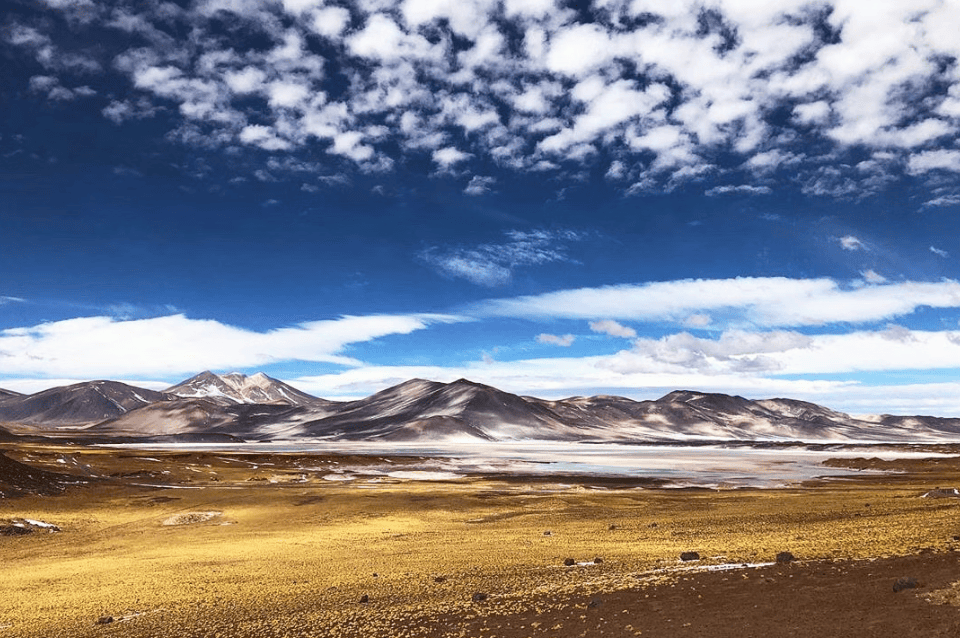
San Pedro de Atacama is one of the best places in South America to see flamingos in the wild. Surrounded by salt flats, high-altitude lagoons, volcanoes, and the vast Andean plateau, this region offers a unique ecosystem where flamingos thrive despite the extreme desert conditions.
If you’re wondering where to see flamingos in San Pedro de Atacama, this guide will help you understand the best locations, the best time to visit, and what to expect, with practical advice based on real visitor experience inside the Reserva Nacional Los Flamencos.
Why San Pedro de Atacama Is One of the Best Places to See Flamingos
What makes San Pedro de Atacama special is the combination of altitude, mineral-rich waters, and protected wetlands. These conditions attract flamingos that feed on microscopic algae found in saline lagoons.
Unlike zoos or isolated wetlands, here you observe flamingos in their natural habitat, framed by the Andes and active volcanoes. The experience feels remote, peaceful, and deeply connected to nature — especially in the early morning or late afternoon.
In my case, arriving early made a noticeable difference. Around 8:00 a.m., the temperature was comfortable (a light fleece was enough), the sky was completely clear, and the landscape felt untouched and quiet.
Reserva Nacional Los Flamencos: The Heart of Flamingo Watching
The Reserva Nacional Los Flamencos is the main protected area where flamingos can be seen near San Pedro de Atacama. Managed by CONAF, the reserve protects salt flats, lagoons, and high-altitude ecosystems that are essential for wildlife.
This is not just a single viewpoint but a network of sites where visitors can walk along clearly marked trails, observe birds responsibly, and learn about the ecosystem through educational panels explaining local flora and fauna.
What stands out is how accessible the reserve is while still feeling wild. Trails are mostly flat, making it suitable for all ages, and the scenery constantly changes as light reflects off the salt crust and shallow waters.
Laguna Chaxa: The Most Accessible Flamingo Spot
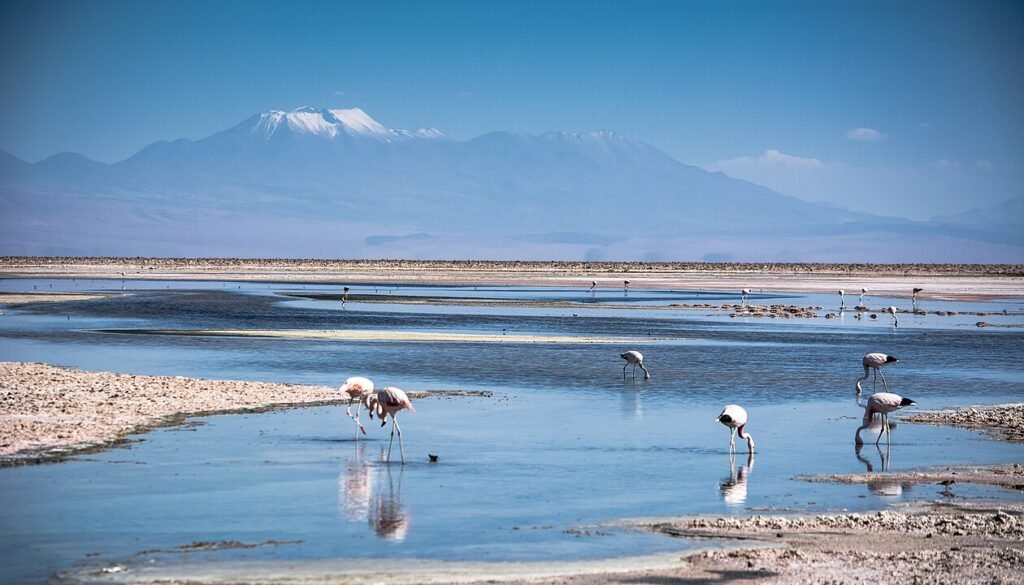
When people ask where to see flamingos in San Pedro de Atacama, Laguna Chaxa is usually the first answer — and for good reason.
Located within the Salar de Atacama, Laguna Chaxa offers:
- Well-defined walking paths
- Multiple observation points
- Consistent flamingo presence throughout the year
During one visit in late February, I saw around twenty flamingos, while another visit in January showed many more. This variability is completely normal and depends on rainfall, water levels, and food availability.
Even when numbers are lower, the experience remains impressive: flamingos feeding quietly in shallow water, small high-altitude birds flying nearby, and the vast salt flat stretching toward distant volcanoes.
Flamingo Species You Can See in the Atacama Desert
One of the highlights of visiting the reserve is the chance to see three different flamingo species:
- Chilean Flamingo (Phoenicopterus chilensis)
- Andean Flamingo (Phoenicoparrus andinus)
- James’s Flamingo (Phoenicoparrus jamesi)
Seeing all three in one location is rare globally, which makes the Atacama particularly special for birdwatchers and photographers.
Best Time of Day and Best Season to See Flamingos
Best time of day
Early morning and late afternoon are ideal. Flamingos are more active, temperatures are milder, and the light enhances the colors of both birds and landscape.
Arriving early also means fewer visitors and a calmer atmosphere — something I found made the experience much more immersive.
Best season
Flamingos can be seen year-round, but numbers fluctuate by season. During the austral summer (December to March), water levels often increase, which can attract larger groups. However, nature is unpredictable, and that’s part of the authenticity of the experience.
What to Expect When Visiting the Salt Flats
The environment is stark, silent, and visually striking. Expect:
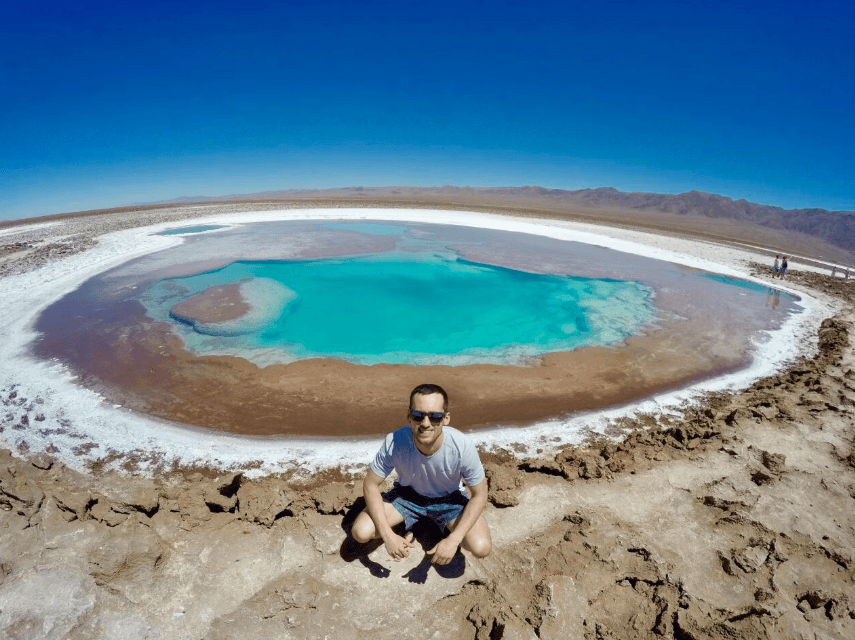
- Salt crusts and shallow lagoons
- Informational panels along the trails
- Minimal but functional facilities (mainly restrooms)
Visitors are allowed to bring their own food and water, which is helpful given the remote setting. Walking is easy, and paths are clearly marked to protect the ecosystem.
One unforgettable moment is staying until late afternoon. As the sun sets, the colors intensify, reflections deepen, and the entire landscape feels almost surreal.
Visiting on a Tour vs Visiting Independently
Both options work well.
- Guided tours provide ecological context and logistics, making the visit smooth and informative. I found the experience particularly enriching with a guide explaining species behavior and conservation efforts.
- Independent visits allow more flexibility and quiet observation, ideal for photography or slow exploration.
Either way, the site feels special — not crowded or commercialized.
Practical Tips for Flamingo Watching in Atacama
- Arrive early or late for better light and activity
- Dress in layers: mornings are cool, afternoons warmer
- Bring water, sunscreen, and a hat
- Respect marked trails and wildlife distances
- Don’t expect guaranteed numbers — expect a real ecosystem
Why Reserva Nacional Los Flamencos Is a Must-Visit
If your goal is to understand where to see flamingos in San Pedro de Atacama, the answer leads directly to the Reserva Nacional Los Flamencos. It offers more than birdwatching: it’s a window into one of the most fragile and beautiful ecosystems in northern Chile.
Between the salt flats, lagoons, mountains, and birds, the experience consistently earns five stars — not because of luxury, but because of authenticity and natural beauty.